
Use any Cryptocurrency as your preferred medium of exchange
Explore solutions designed to simplify crypto usage for everyday transactions.
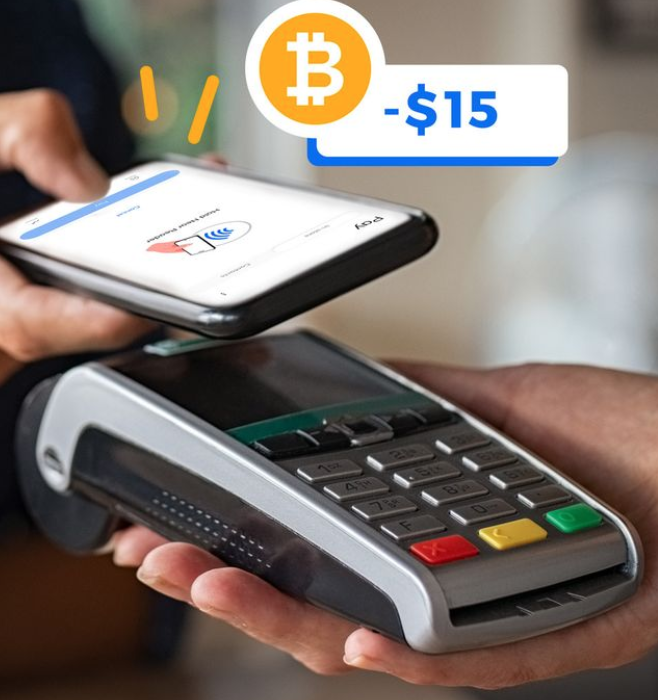
Real-World-Use service (1000kr)
Get 1-on-1 guidance on how to use crypto efficiently for everyday transactions—no experience needed.
(One-time session) — I stay until everything is fully set up
You’ll learn to use Real-world payment methods like:
- Revolut
- Bitrefill
- Lightning Network
- Kaspa
- Crypto ATMs
Using Crypto when the Merchant does not
Ideally, you would spend crypto directly as the medium of exchange. However, this isn’t always possible, as crypto is not yet widely accepted for everyday transactions. Therefore, you need a simple way to convert your crypto into the seller’s preferred currency at the time of purchase.
Spend crypto with instant fiat conversion
Instantly convert crypto to your local currency at the point of purchase with your Revolut card—making everyday spending seamless, even where crypto isn’t accepted. You can also withdraw cash from ATMs using your crypto balance.
Indirect spending via prepaid value
Here you’re using crypto to acquire something the merchant already accepts (gift card, prepaid balance, etc.)
Faster and Cheaper Direct Crypto Payments
In other cases, when you pay directly with Crypto, some cryptocurrencies, like Bitcoin, are simply too slow and costly to use directly for daily transactions. In such cases, you’ll need solutions that make transactions faster and cheaper.

Lightning Network
Send and receive Bitcoin instantly through the Lightning Network—enabling fast, low-cost payments between users and merchants with Lightning-enabled wallets, without waiting for blockchain confirmations.
Read more about the Lightning Network.
Bitcoin being slow and expensive for everyday payments is known as a scalability issue. This is a result of Bitcoin’s underlying design, where every transaction must be processed and confirmed on the blockchain, which is a very secure network, but costly and slow. Solving this scalability limitation the right way is an ongoing focus within the crypto industry. One of the leading solutions is the Lightning Network—a Layer 2 built on top of Bitcoin. It enables fast, low-cost transactions by moving most activity off the main blockchain while still relying on it for final settlement. In simple terms, Layer 2 solutions improve scalability by shifting everyday transactions away from the base layer, trading some degree of decentralization and simplicity of security for speed and efficiency. For daily spending, this trade-off is generally considered acceptable—similar to how you might carry a small amount of cash for convenience, while keeping the majority of your savings secured elsewhere. This approach is not unique to Bitcoin. Modern Fiat systems scale in a similar way: most payments happen as balance updates within banks (effectively a “Layer 2”), while actual settlement between banks occurs later, often in batches. The Lightning Network applies a comparable idea to Bitcoin—enabling fast, everyday transactions while still anchoring final settlement to the base layer.
Recommended Lightning wallets:

Wallet of Satoshi
Best for beginners
Works instantly — no setup.
Very easy to use
The company holds your Bitcoin

Phoenix Wallet
Best for owning your Bitcoin
You control your money
Simple mobile wallet
Slightly more setup
???? Important
All Lightning wallets are best for spending, not saving.
For long-term storage, use a hardware wallet.

Kaspa
Use a Crypto-Currency that is fast, cheap and secure. Kaspa is a leading project when it comes to solving the scalability issue on chain.
Read More About Kaspa
While solutions like the Lightning Network aim to solve Bitcoin’s scalability challenges by moving transactions off-chain, other approaches attempt to solve the problem directly on-chain. Achieving scalability on the base layer typically requires creating a new cryptocurrency or fundamentally modifying Bitcoin itself through a hard fork. Several projects have explored this path. One notable example is Kaspa, which is a new cryptocurrency, and approaches scalability differently by replacing the traditional blockchain structure with a BlockDAG (Directed Acyclic Graph). This design aims to address the so-called “blockchain trilemma”—seeking to achieve scalability, decentralization, and security simultaneously. The word Kaspa means silver in Aramaic language, and the reason for choosing the name Kaspa for this crypto, is that it creates the same relationship that silver had with gold in ancient times. Silver was historically used for smaller transactions and was more scalable in this way. This is the same that Kaspa is trying to do, and Bitcoin is compared to as gold. Since its launch in November 2021, Kaspa has demonstrated promising performance in terms of speed and throughput. However, like any relatively new technology, it is still developing and has yet to establish a long-term track record. Ongoing development can be a positive sign of innovation, but it also means the system is still evolving, which may affect confidence until it matures further. If such approaches prove reliable over time, they could represent a path toward fulfilling the original vision of Bitcoin as efficient, peer-to-peer electronic cash systems. Kaspa has also recieved strong backlash from many in the Bitcoin community, mainly because it is a direct competitor as crypto money, since money in the free market tends to be a winner takes all market.
This is an ongoing discussion, and only time will tell. I encourage you to do your own research. At the end of the day, what both Bitcoin, Kaspa and many others are trying to fulfill, is to get Sound Money back again. This is what matters in the grand scheme of things.
To explore this topic further, you may want to look into the concept of the “blockchain trilemma,” which explains the core trade-offs in blockchain design. To learn more about Kaspa, I would recommend the Youtuber “Kaspa Silver”.
When using Kaspa directly for everyday purchases, I would recommend this wallet:
???? Important
Kaspium Wallet is a “hot wallet” which is best for spending, not saving.
For long-term storage, use a hardware wallet.
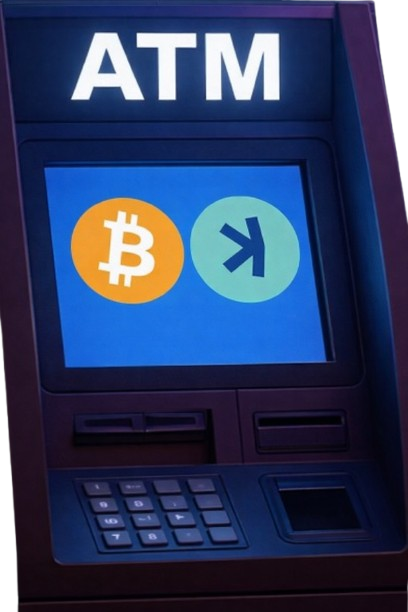
Crypto ATM
Exchange between Cash↔Crypto
Currently available as a manual service (ATM planned for the future), for transactions up to 1000 DKK. Typical total cost is 10% – 15%, in line with crypto ATM market conditions, with no hidden fees — the final price is always confirmed before the transaction.
All exchanges are handled in person with clear step-by-step confirmation. You provide cash and your wallet QR code to receive crypto, or send crypto and receive cash once the transaction is verified.
Supports Bitcoin (BTC) and Kaspa (KAS).